
Choosing solid wood worktops: benefits and care
By Barry, Director, Zebra Kitchens and Interiors Last updated 16 November 2026 · 6 min read
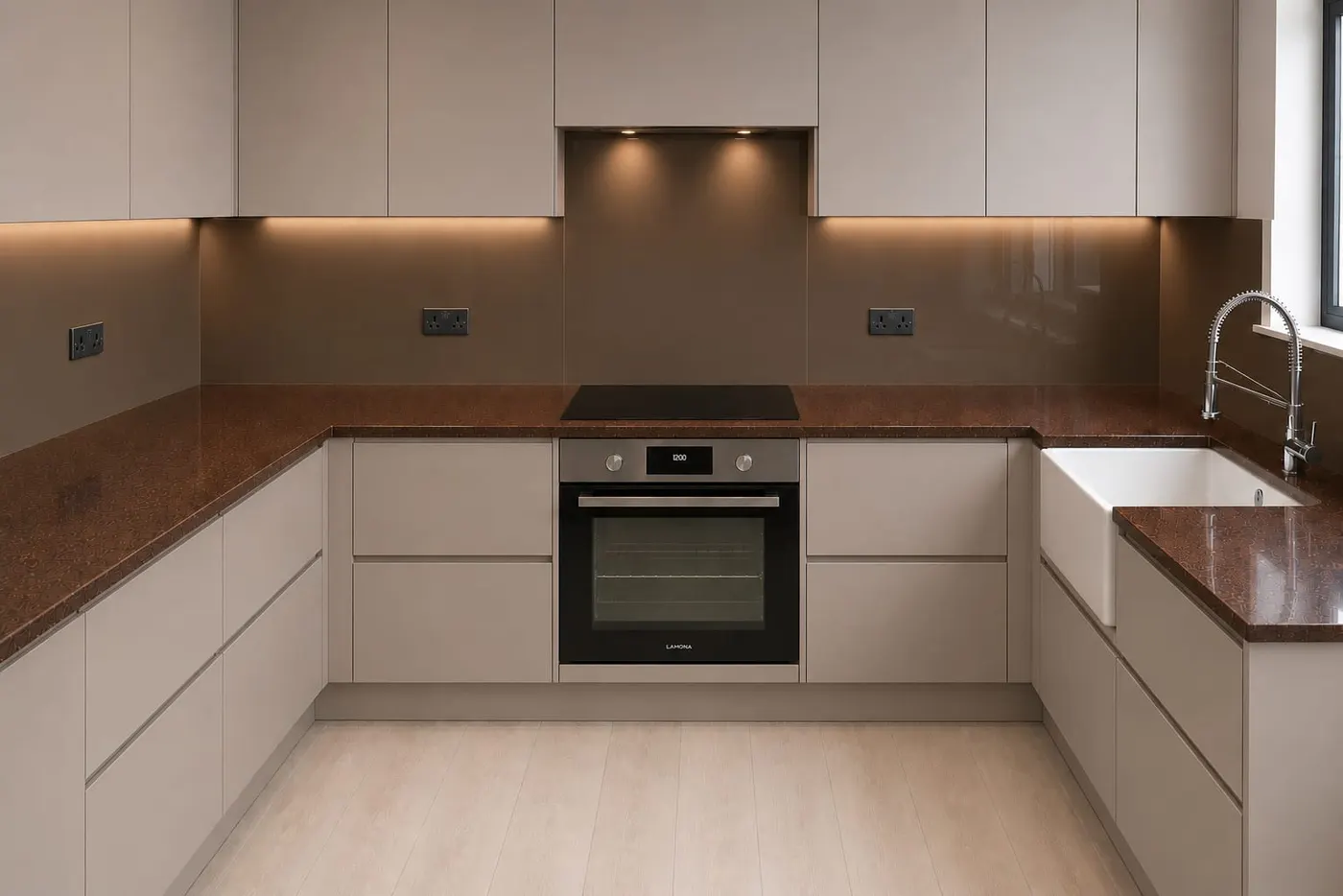
Solid wood worktops offer natural grain and a surface that can develop character through use. They also need an owner who is comfortable with maintenance and prompt attention to spills. Choosing timber is less about finding a perfect material and more about deciding which compromises suit your kitchen.
We discuss surfaces in the context of cooking, washing up and everyday habits. For some Staffordshire households, the feel and repair potential of timber are compelling. Others prefer the simpler routine of a suitably specified quartz surface. Neither choice removes the need for sensible care around heat and water.
Understand how solid wood worktops behave
Timber responds to changes in moisture and temperature. Correct finishing and fitting help manage that movement, but they do not turn wood into an inert material. The installation must allow the worktop to move as intended, following the supplier instructions for fixings, clearances and support rather than holding it rigidly.
Grain, tone and markings vary between pieces. A small sample can suggest a colour family without showing every variation in a finished run. Look at larger examples where possible and decide whether natural differences appeal to you. They should not be mistaken for the uniformity of a manufactured pattern.
Different timbers and constructions have different characteristics, so ask what is actually being supplied. Consider the way sections are joined, the proposed edge profile and the appearance around cut outs. Describing a worktop simply as wood leaves important questions about preparation, finish and fitting unanswered before an order is placed.
Weigh the appeal against daily drawbacks
A wooden surface can feel welcoming beside painted cabinetry and soften a room with hard flooring. Some marks can be addressed by appropriate refinishing, which gives timber a repair route that many homeowners value. The result depends on the depth of damage, the finish and the work involved, not merely owning sandpaper.
Water left around a tap, hot pans and sharp knives can all damage the surface. A busy household needs to be willing to wipe up spills, use chopping boards and keep protective stands available. If those habits feel unrealistic, that is a useful reason to consider another material rather than an admission of failure.
Timber is not necessarily ruined by the first blemish, but neither should every stain be dismissed as attractive character. Think about your tolerance for visible change. A surface that looks appealing in a softly lit photograph may feel different beside a sink after repeated wet use and imperfect maintenance.
Give the sink area particular attention
The sink cut out, tap holes, joints and exposed ends are important moisture vulnerable areas. They need the specified preparation and sealing, including surfaces that will not remain visible after fitting. Ask who is responsible for this work and how the completed installation should be checked and maintained.
A sink style that exposes more timber around the bowl may demand particular care. Undermounted sinks are not automatically suitable with every wooden worktop or finish. Confirm compatibility with the supplier and installer before designing the detail, rather than assuming that an arrangement seen with quartz can simply be copied.
Do not leave wet cloths, damp chopping boards or washing up bowls sitting on the surface. Check around the tap base for persistent moisture and deal with leaks promptly. If darkening, opening joints or other changes appear, seek advice early instead of repeatedly adding oil over an unresolved water problem.
Want a second opinion on your own kitchen?
Barry offers a free home visit and free kitchen design, or you can visit the showroom at 181 Walsall Road, Great Wyrley.
Make a realistic care routine
Follow the guidance for the actual finish supplied. Some wooden worktops use oil based treatments, while other finishes have different care requirements. Do not apply a general household polish or an incompatible coating because it is described as suitable for wood. Keep the product instructions with the kitchen paperwork.
Clean with the recommended method, avoid soaking the surface and dry it after wet tasks. Use chopping boards for preparation and protective stands beneath hot cookware. Harsh cleaners and abrasive pads may damage the finish. Test any permitted treatment as instructed before using it across a prominent part of the worktop.
Refinishing intervals depend on the finish, use and condition; there is no universal timetable that suits every kitchen. Ask how to recognise when treatment is needed. Where oil soaked cloths are involved, follow the product instructions for safe handling and disposal because some drying oils present a self heating fire risk.
Compare timber with quartz fairly
Quartz generally asks for less routine surface treatment than timber and can provide a consistent appearance across a scheme. It still needs protection from excessive heat and suitable cleaning products. Engineered quartz is not indestructible, and damaged edges or surfaces may need specialist assessment rather than an easy household repair.
Timber offers a different feel and may permit local refinishing, although colour matching an aged surface can take care. Quartz offers different patterns and edge options but requires its own fabrication and fitting process. Compare samples, joint positions, maintenance instructions and practical repair routes instead of assuming one material wins on every measure.
Decide with samples and a full specification
View a timber sample alongside the cabinet colour in your room, recognising that the final surface will vary. Ask about finishing all required faces, appliance moisture protection, cut outs and ongoing care. If you combine wood and quartz in different areas, agree the junction detail and the maintenance responsibilities for each material.
We offer a free home visit and free design with Barry to discuss where different worktops could make sense. Visit our showroom at 181 Walsall Road, Great Wyrley, with photographs and a list of daily tasks. We can compare appearance and practical expectations before you settle on the room specification.
Related services, projects and areas
Service: Fully Fitted Kitchens
Kitchen questions: Kitchen renovation questions answered
Frequently asked questions
Can I place hot pans on a wooden worktop?
Use a suitable protective stand rather than putting hot cookware directly on timber. Heat can mark or damage the surface and finish. Quartz also needs protection from excessive heat, so this is a sensible habit whichever material you choose.
Will oil make a wooden worktop waterproof?
No finish should be treated as permission to leave standing water. Use the specified treatment and follow its instructions, but still wipe spills and check vulnerable areas. Persistent moisture around taps or joints needs attention rather than another casual coat of oil.
Can scratches be sanded out?
Some surface marks may be improved by suitable sanding and refinishing, depending on the worktop and finish. Deep damage or stains can need professional advice. Follow the supplier guidance and consider how the repaired patch will blend with the surrounding surface.
Is quartz always a better choice?
No. Quartz can suit owners seeking less routine treatment, while timber appeals for its natural feel and potential for refinishing. Both require care. Choose according to cooking habits, tolerance for visible wear and the installation details, not a universal ranking.
Related guides
Free kitchen design: what to expect from Barry
Free kitchen design from Zebra: what happens at the home visit, how Barry measures and plans your room and what you get before you decide to go ahead.
Practical galley kitchen ideas for a workable layout
Explore galley kitchen ideas for clear walkways, useful storage and better lighting. Plan your layout with Barry at Zebra Kitchens in Great Wyrley today.
Glass splashback kitchen ideas: colour, care and fitting
Explore glass splashback kitchen ideas, from colour samples to sockets, cleaning and fitting. Get practical planning advice from Barry at Zebra Kitchens today.
Free kitchen design with Barry
Tell us a little about your kitchen and Barry will be in touch.
07488 431099181 Walsall Road, Great Wyrley, Walsall WS6 6NL